

Lift Chair vs. Recliner: What's the Real Difference?
- Posted on
- By Frank Baratta
- 0
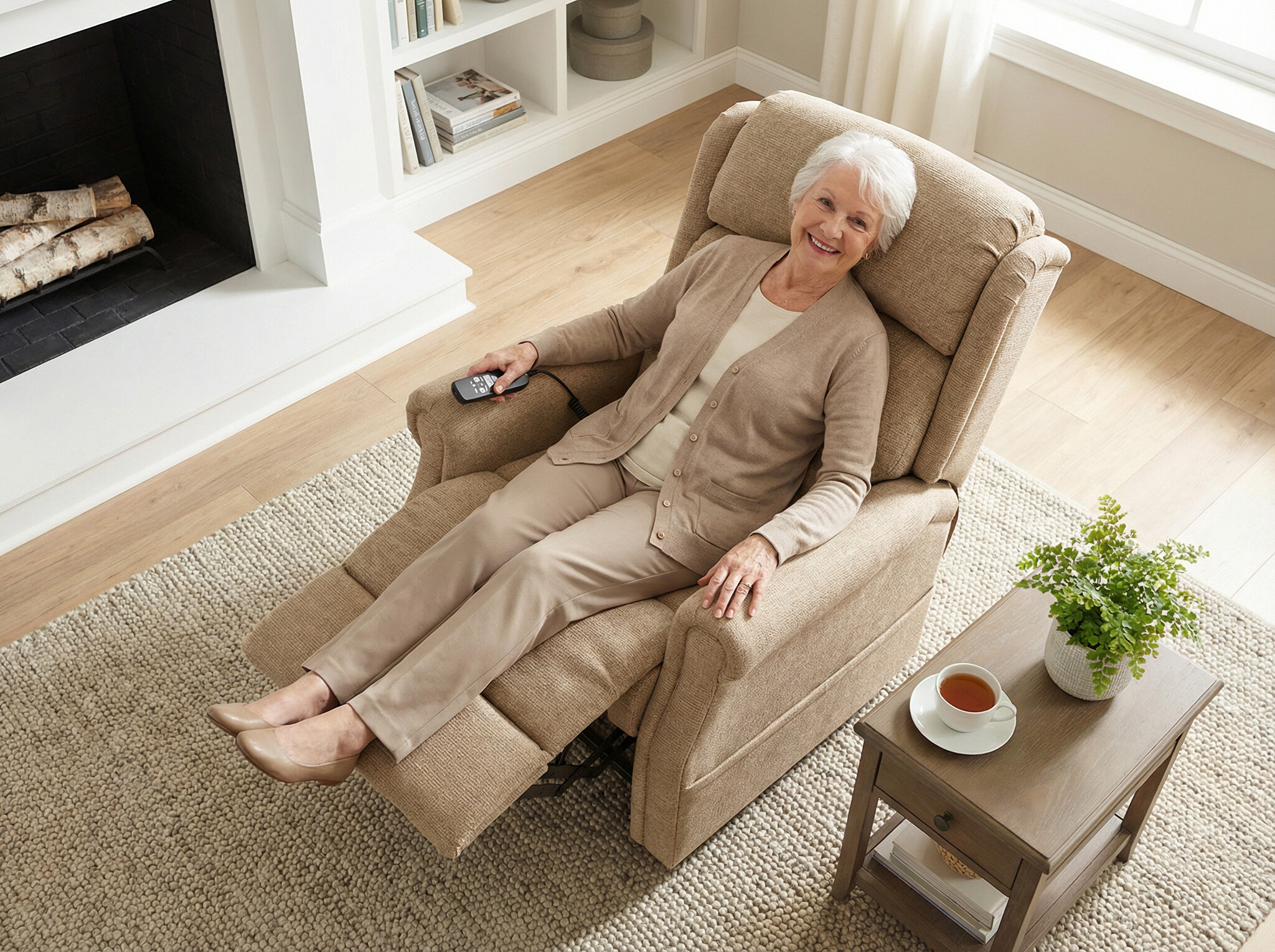
Your dad's old recliner might be his favorite seat, but if he's struggling to stand up, it's time to learn the difference between a lift chair and a recliner. This guide covers key features, Medicare coverage, pricing, and how to decide which one is right for your loved one.
Your dad's old recliner has been his favorite chair for twenty years. But lately, you've noticed he has to grab the armrests and rock himself forward just to stand up. Sometimes he calls for help. Sometimes he doesn't — and that's when accidents happen.
If that sounds familiar, it might be time to have a conversation about a lift chair.
A lot of people assume a lift chair and a recliner are basically the same thing — just one is more expensive. That's not quite right. There are some important differences between the two, and understanding them can help you make a much better decision for your parent or loved one.
What Is a Lift Chair?
A lift chair — also called a power lift recliner — is a motorized chair with a built-in lifting mechanism that gently tilts the entire seat forward, helping the person in it move from a seated position to standing with far less effort.
Think of it like this: instead of pushing yourself up from a low, cushioned seat (which requires a lot of leg and core strength), the chair does most of the work. You press a button, and the chair slowly raises and tips forward until you're almost standing on your own.
Lift chairs are classified as FDA Class II medical devices. That matters for a few reasons. It means they've been evaluated and regulated for safety and effectiveness — they're not just furniture. It also means they can qualify for Medicare coverage under the right conditions (more on that in a moment).
Most lift chairs also recline like a regular recliner. Many models have multiple positions — from upright to partially reclined to fully flat — making them useful for sleeping, elevating the legs, or simply relaxing throughout the day. Higher-end models include features like heat and massage, USB charging ports, and memory foam cushioning.
What Is a Standard Recliner?
A standard recliner is exactly what it sounds like: a comfortable chair that reclines. You push back against the chair or pull a lever, and the back tilts and the footrest comes up.
There's nothing wrong with a recliner. They're comfortable, widely available, and come in every price range and style imaginable. For someone without mobility challenges, a recliner is a perfectly fine piece of furniture.
The problem is that recliners weren't designed with mobility in mind. They're built for comfort and relaxation, not for helping someone get safely in and out of the chair. The low, cushioned seat that makes them comfortable to sit in is the same thing that makes them hard to get out of — especially as strength and balance decline with age.
A recliner has no lifting mechanism, no medical features, and no path to insurance coverage.
Key Differences: Lift Chair vs. Recliner
Here's a side-by-side comparison so you can see the differences clearly:
| Feature | Lift Chair | Standard Recliner |
|---|---|---|
| Lifting mechanism | Yes — motorized, tilts seat forward | No |
| Medicare eligible | Yes (lift mechanism portion) | No |
| FDA classification | Class II medical device | Furniture |
| Reclines | Yes (most models) | Yes |
| Medical/safety features | Yes — helps prevent falls, aids mobility | No |
| Price range | $700–$3,000+ | $300–$2,000+ |
| Ideal for | Mobility limitations, post-surgery, arthritis | General comfort use |
The most important row in that table is the lifting mechanism. That one feature changes everything about how the chair functions for someone with limited mobility.
When a Regular Recliner Is Fine
Not every older adult needs a lift chair. If your loved one:
- Can get up from a chair without help or without significant effort
- Has no serious arthritis, joint pain, or balance issues
- Isn't recovering from surgery or dealing with a condition that affects their legs or core
- Just wants a comfortable place to relax and watch TV
…then a regular recliner is probably perfectly fine. Comfort is a real need, and there's no reason to spend more than necessary.
A recliner becomes a problem when the person using it starts struggling to get out of it. That's the turning point.
When You Need a Lift Chair
A lift chair makes a real difference when someone:
- Has arthritis in the hips, knees, or lower back that makes standing up painful
- Is recovering from hip or knee surgery and needs to protect the joint while standing
- Has balance issues or has had a fall, and standing from a low seat is a risk
- Has COPD or heart conditions that make physical exertion — even standing up — difficult
- Simply can no longer stand up from a seated position without help
In these situations, a lift chair isn't a luxury. It's a practical tool that protects your loved one's independence and reduces the risk of injury. It also reduces the strain on caregivers who might otherwise be helping them up multiple times a day.
The ability to sit down and stand up safely on your own is tied closely to dignity. A lift chair quietly handles that challenge without anyone needing to be called in for help.
Can Medicare Help Pay for a Lift Chair?
Yes — with some important details.
Medicare Part B can help cover the cost of the lift mechanism in a lift chair (not the chair itself) when a doctor certifies that it's medically necessary. In practice, this typically means Medicare will contribute a set amount toward the total cost.
To qualify, your loved one generally needs:
- A written prescription or order from their physician
- A documented medical need (conditions like severe arthritis, muscular dystrophy, or other neuromuscular disease affecting the ability to stand)
- To purchase from a Medicare-enrolled DME supplier (Atlantic Healthcare Products qualifies)
Medicare coverage for lift chairs can be a bit nuanced, so we wrote a dedicated blog post walking through the whole process. Check out our Medicare guide for lift chairs if you want the full details.
Atlantic Healthcare Products is a Medicare-enrolled DME supplier in Palm Beach County, so we can help you determine whether your loved one qualifies and walk you through the paperwork.
Try Before You Buy — Including a Rental Option
One of the best things about shopping at Atlantic Healthcare Products is that you can actually try lift chairs and recliners in our showroom before making a decision. You can feel the difference for yourself — or better yet, bring your loved one in and let them try it.
We carry lift chairs from Pride Mobility and Golden Technologies, two of the most trusted names in the industry. These are chairs built to last, with smooth, quiet motors and a range of styles that actually look like real furniture — not medical equipment.
Not sure if a lift chair is the right fit yet? We also offer lift chair rentals. Our short-term rental is $70 for 3 days, which gives you a chance to try it at home before committing to a purchase. A 28-day rental is available for $150, which is great for post-surgery recovery when you need the chair temporarily.
There's no better way to know if something works than to try it in your own home, in your normal routine.
What to Look for When Choosing a Lift Chair
When you are looking to buy a lift chair near me, remember that they are all the chairs are the same. Once you've decided a lift chair is the right call, here are the things worth paying attention to.
Weight capacity is the first thing to check. Most lift chairs have a standard capacity of around 300 lbs, but heavy-duty models go up to 500 lbs or more. Get the right size for the person using it.
Number of positions matters for comfort. A two-position chair reclines to about 45 degrees. A three-position chair goes nearly flat. An infinite-position chair (sometimes called a zero-gravity chair) lets you adjust the back and footrest independently, which is ideal for people who sleep in the chair or need specific positioning for medical reasons.
Fabric and style are worth thinking about too. Modern lift chairs come in a wide range of fabrics — microfiber, leather-look vinyl, plush velvet — and colors. They look like real furniture, not medical equipment. Your loved one is going to be sitting in it every day, so it should feel good and fit the room.
Remote design is often overlooked. Make sure the handheld remote has large, clearly labeled buttons that are easy to use. Some remotes have backlighting for use in dim rooms.
Come See Us
If you're trying to figure out whether a lift chair is the right call for your parent or loved one, come see us. Our staff will walk you through the differences, let you try the chairs, and help you understand your insurance options.
We have two showroom locations in Palm Beach County:
West Palm Beach: Riverbridge Shopping Center, 6782 Forest Hill Blvd, West Palm Beach, FL 33413 | (561) 964-6767
Boynton Beach: Boynton Trail Shopping Center, 9832 South Military Trail G1, Boynton Beach, FL 33436 | (561) 733-2331
No pressure, no sales tactics. Just real answers from people who know this equipment well. Give us a call or stop by — we're happy to help.
Atlantic Healthcare Products is a Medicare-enrolled DME supplier serving Palm Beach County, FL. We carry lift chairs by Pride Mobility and Golden Technologies, plus scooters, wheelchairs, hospital beds, grab bars, and more.
Comments
Be the first to comment...