

Fall Prevention at Home - 10 Simple Changes That Save Lives
- Posted on
- By Rocky Baratta
- 0
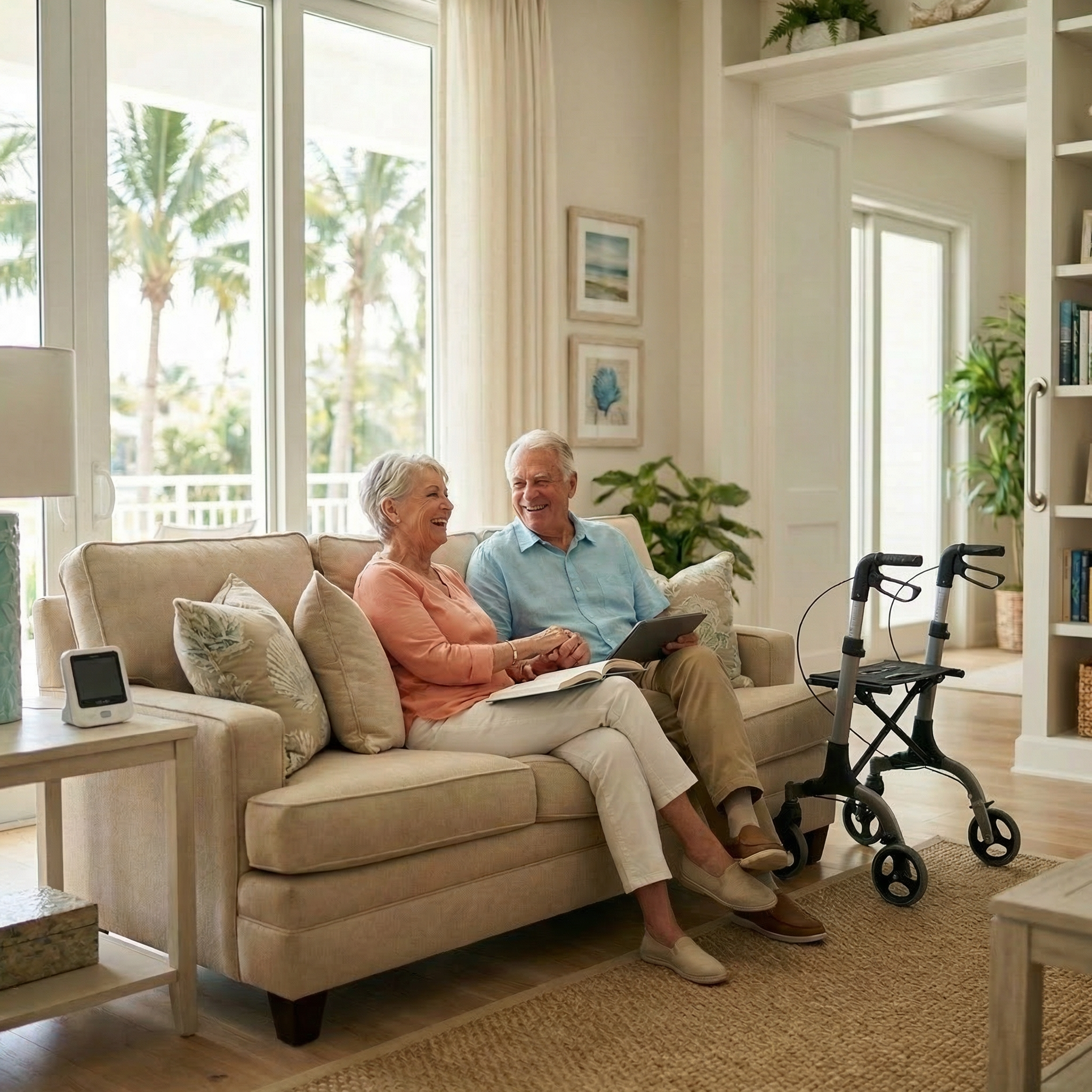
Ten practical fall-prevention tips for seniors in Palm Beach County, covering walking paths, bathroom safety, lighting, rugs, seating, mobility aids, and when to get professional help.
Falls are one of the biggest threats to a senior's independence at home. Many families in Palm Beach County do not start making changes until after a fall, a hospital stay, or a close call that shakes everyone up.
The good news is that fall prevention usually starts with simple, practical fixes. You do not have to remodel the entire house to make a meaningful difference.
1. Clear the main walking paths
Start with the routes used every single day, like the path from the bed to the bathroom or from the living room to the kitchen. Loose cords, baskets, side tables, and clutter create unnecessary trip hazards.
This is one of the easiest changes to make and one of the most useful. Cleaner walkways make it easier to move safely with or without a walker.
2. Improve bathroom safety
Bathrooms are one of the highest-risk rooms in the home because floors get wet and movement often involves turning, lowering, and standing. Grab bars, shower chairs, raised toilet seats, and non-slip surfaces can reduce strain and improve stability.
Atlantic Healthcare Products carries bathroom safety products and sees strong search demand in this category, including extremely high impression volume for toilet seat riser-related pages. That tells us local families are actively looking for help with exactly these kinds of safety upgrades.
3. Add better lighting
Poor lighting is a major reason nighttime falls happen. Older adults often need more light to see clearly, especially when waking up during the night.
Nightlights, motion lights, and brighter bulbs in key areas can help a lot. Hallways, bedrooms, and bathrooms are usually the first places to improve.
4. Remove loose rugs
Throw rugs may look harmless, but they are one of the most common tripping hazards in a home. This risk gets even worse when a senior shuffles, uses a cane, or starts relying on a walker.
The safest move is to remove them from high-traffic areas. If one must stay, it should have secure non-slip backing and completely flat edges.
5. Check chairs and seating height
A chair that is too low can turn standing up into a risky event. Many families first notice mobility decline when a parent has to rock forward, push hard on the armrests, or ask for help getting out of a recliner.
Lift chairs can help by gently raising the user into a safer standing position. Atlantic Healthcare Products offers lift chair rentals starting at $70 for 3 days and $150 for 28 days, which can be helpful when a family wants to test whether better seating reduces daily risk.
6. Make sure mobility aids fit correctly
A walker or cane only helps when it is the right size and gets used properly. Atlantic Healthcare Products serves many customers who already have equipment but never had it adjusted correctly.
A properly fitted walker or rollator can improve posture and balance, while the wrong setup can make movement feel awkward and unsafe. That is why in-person fitting matters.
7. Put common items within reach
Falls often happen when someone stretches too far, bends too low, or climbs onto something unstable to reach a normal household item. Moving everyday items into easy reach cuts down on those risky moments.
Medications, dishes, towels, remotes, and glasses should all be stored where they can be reached without straining. This change is simple, but it removes a surprising amount of danger.
8. Pay attention to shoes and socks
Backless slippers and slick socks can be a problem on tile or wood floors. Shoes with closed heels and non-slip soles are usually much safer for everyday walking at home.
For nighttime bathroom trips, grip socks can help more than ordinary socks. The key is traction and stability, not just comfort.
9. Do a room-by-room safety check
One useful way to think about fall prevention is room by room instead of all at once. The bathroom, bedroom, living room, and main entry points usually deserve attention first because that is where daily routines happen most.
That kind of practical, step-by-step approach matches how many seniors and caregivers like to work: clear, useful advice without extra jargon. Checking one room at a time makes the process feel manageable instead of overwhelming.
10. Get help before there is another emergency
Many families wait until discharge day or after a bad fall to start asking questions. Adult children often juggle work, family, and caregiving responsibilities and feel rushed and stressed when equipment decisions suddenly become urgent.
Getting advice earlier can make the home safer and make the family feel calmer. Even one conversation about grab bars, walkers, bathroom safety, or seating can help clarify what should happen first.
What to do next
If you are worried about falls at home in Palm Beach County, start with the basics: walking paths, bathroom safety, lighting, rugs, and seating. Then talk with a local medical equipment team that can help you choose practical next steps.
Atlantic Healthcare Products serves Palm Beach County from the West Palm Beach showroom at 6782 Forest Hill Blvd, West Palm Beach, FL 33413, phone 561-964-6767, and the Boynton Beach showroom at 9832 South Military Trail G1, Boynton Beach, FL 33436, phone 561-733-2331. The team can help you compare bathroom safety products, walkers, lift chairs, and other everyday safety equipment, with white glove delivery available for many items.
Comments
Be the first to comment...